
The last time I climbed with Andrew Noble, we had fallen off the Dufourspitze after a snowy ledge had given way under his foot. As the two of us joined the reduced number of Japanese tourists on the train to the “top of Europe” at the Jungfraujoch, we hoped a similar fate would not befall us on our trip to the Monch and Jungfrau.

We followed the pisted track (30 mins) to the foot of the Monch, en route to the Mönchsjoch Hut which would be our home for the night. It was extremely windy with gusts in the range of 30 to 40 km/hr and clouds constantly swirled around us which would occasionally reveal clear skies and bright sunshine. The weather made me feel a little anxious.
This was only my second summer mountaineering trip where I was taking the role of leader. I take this responsibility very seriously – not only is my own life in my hands but also that of my partner. Our success and safety depend on my and our joint ability to make the right decisions and to execute our plan without error.
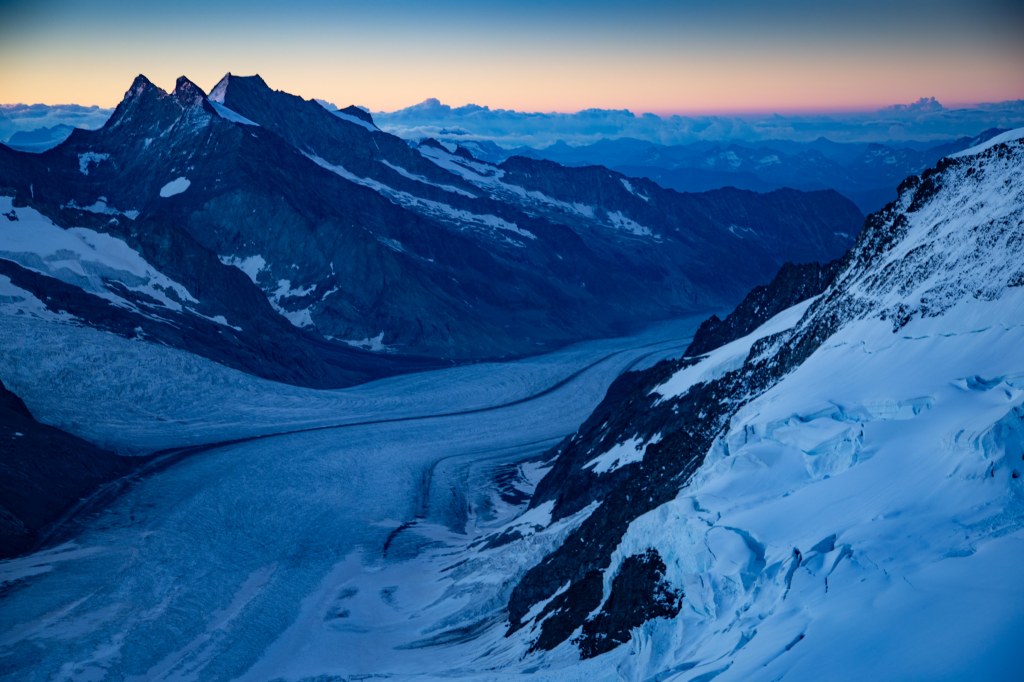
The Monch is graded, PD+ or Peu Difficile plus. Mountaineering grades begin with Facile and the highest grade is the wonderfully named ABO or Abominablement Difficile (Abominable) – reserved for the “most impossible and dangerous climbs”. I have done a lot of mountains at higher grades that PD with guides and Sebastian and so PD+ was, at least in theory, well within my leading capabilities. The rule of leading is that the leader “must never fall” and so I already felt the weight of responsibility.
The route began on rock and there was a fair bit of smooth, glassy ice on some rocks which is potentially dangerous and made me nervous – but it seemed manageable and we continued. The climbing was easy but I put in a lot of protection (Cams and slings around spikes, etc), way more than we really needed and so we were pretty slow – but very safe!
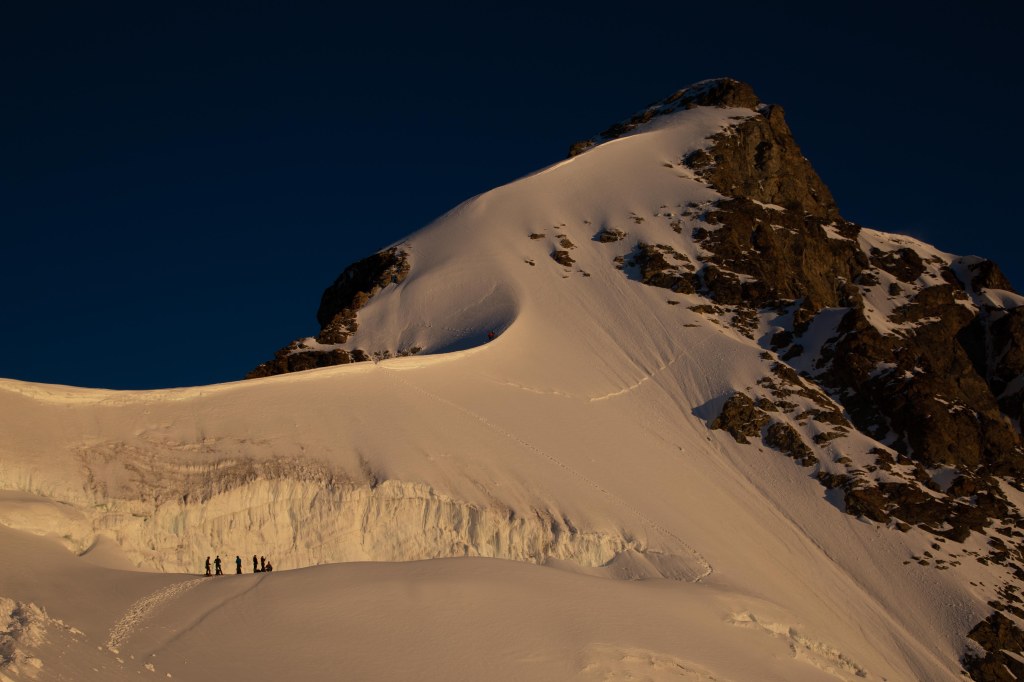
The rock eventually ends and the final part of the climb is a fairly long, knife edge, snowy ridge all the way to the summit. As “knife edge” ridges of the Alps go, this was a fairly blunt one and the snow conditions were excellent. That said, a fall would have had significant consequences (although probably not fatal) and the only form of protection in the event of the fall is jumping to the other side of the ridge or digging every body part into the snow to try and arrest the fall of the other party.
I went first and “short roped” Andrew – the theory being that if he has a slip I would attempt to “catch him” before his slip turned into a big slide. His job was to jump in the opposite direction to whichever I fell and as I was in front of him, this should (once again in theory) be easier as the leader does not see in which direction the second has fallen. Before we set off, we took our moment to remind ourselves to walk as if we were in wearing nappies so that our crampons would not catch on our other leg. We began walking really carefully with total focus, pausing occasionally to re-set when our concentration would wander slightly. We made it without incident to the summit.
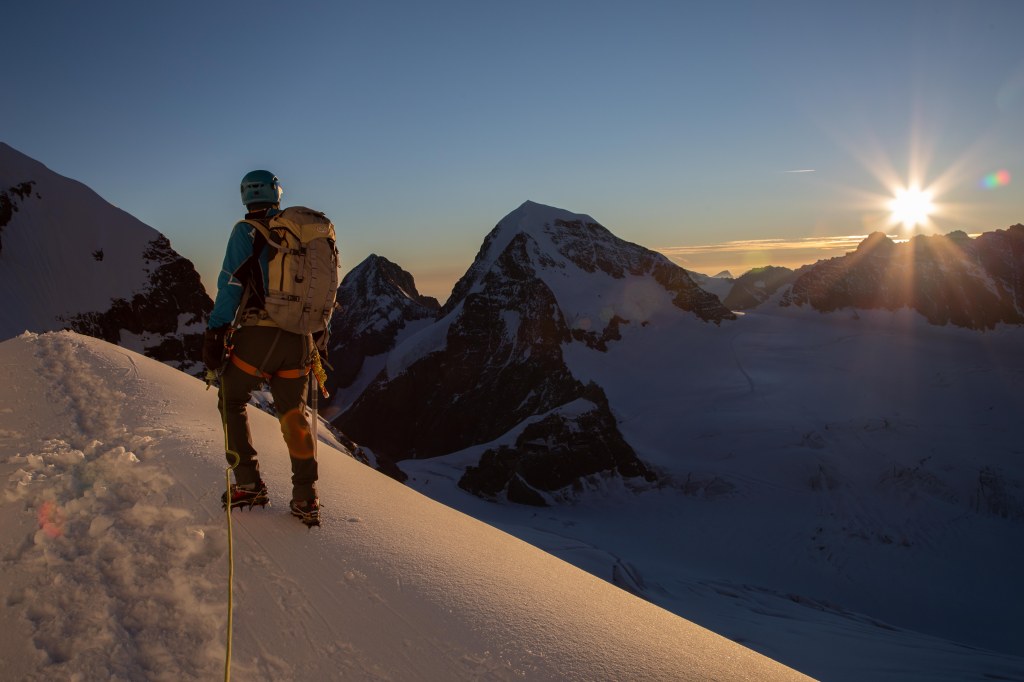
The wind howled and we stayed as long as we could to try and capture some images but eventually, the wind pushed us to start the return journey. We made good steady progress and descended without incident and walked for fifteen minutes to the hut.
Breakfast was at 3:00am the following morning but I set my alarm for 2:00am as I wanted to practice my star photography. I could not get a clear shot of the milky way but managed a couple of shots I was happy with (still looking forward to the Melody masterclass!)
We were the last to leave the hut which was tactically a poor decision as we knew we would be slow. The route begins with an easy walk across the glacier to a rock climb. It was pitch black which made everything appear more treacherous and intimidating but the climbing was straightforward. We used less protection, and “moved together” using natural features for protection by placing the rope behind a spike or rock. We were faster than yesterday but still relatively slow.
The route returns to snow and we continued along easy terrain. Just at this moment the sun began to rise and a staggeringly beautiful spectacle of light, shade, shadow and hue played out on the flanks of the Jungfrau. We acknowledged how lucky and privileged we were to be able to enjoy such a show.
The final part of the Jungfrau involves a potentially fatal section where a slide on the snow could result in a eventual fall over a ledge and into the gaping void below. Stanchions, according to the guidebook, are placed at every 40m for protection. This was generally fine, although at one point either our rope shrank or the gap was more like 50m and so for a while we were very exposed. Conditions were excellent and whilst we felt very secure, we progressed very carefully. As if to illustrate our relative lack of experience, a French chap casually walked past us on his own, no rope, nothing, as if he were walking to the local shops and bid us good day!
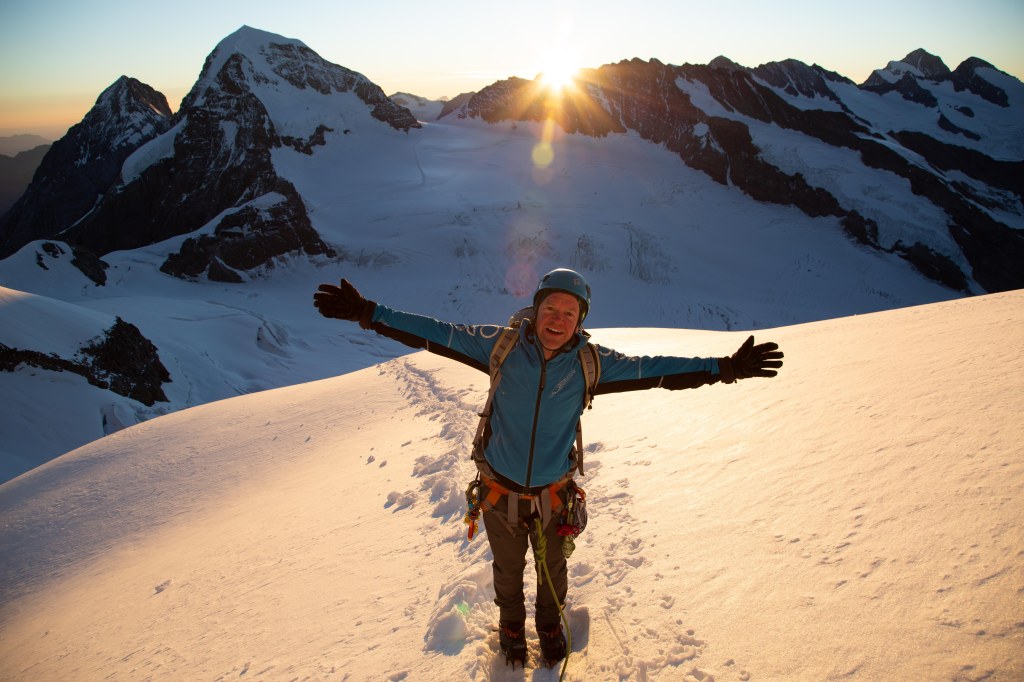
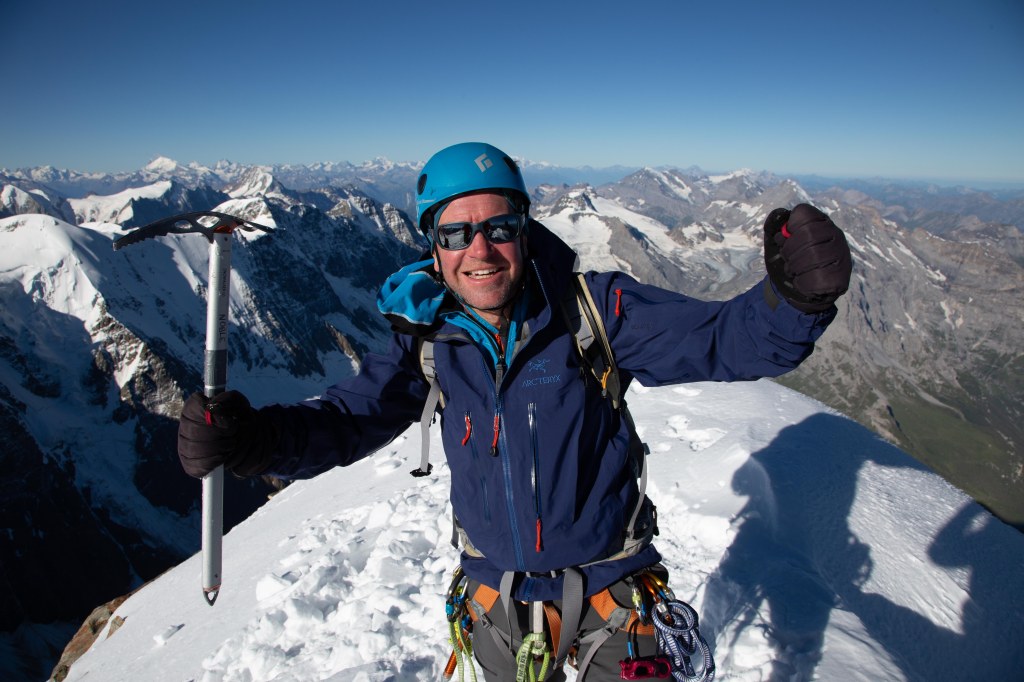
The summit afforded fantastic views in every direction and the skies were clear and the mountains stunning. This felt like a real achievement.
Our return along the snow flank was relatively fast and we became efficient at managing the ropes and our change overs at each stanchion. Our late start and slow progress meant that the snow was now soft which slowed progress and increased risk – we were probably just about ok in terms of the time window. Incredibly we saw two other groups heading up as we came down – we worried for their safety. The rock section, which has seemed so intimidating in the dark, appeared ridiculously easy on the descent. A small rappel provided the only point of interest.
We were descending at the same time of another couple and the leading man lowered his partner and then down climbed. My ego wanted to follow and after lowering Andrew I began to downclimb but realised that whilst I probably could do it, it was creating unnecessary risk. I put my ego in check and rappelled – as I descended, I congratulated myself for making a good decision!
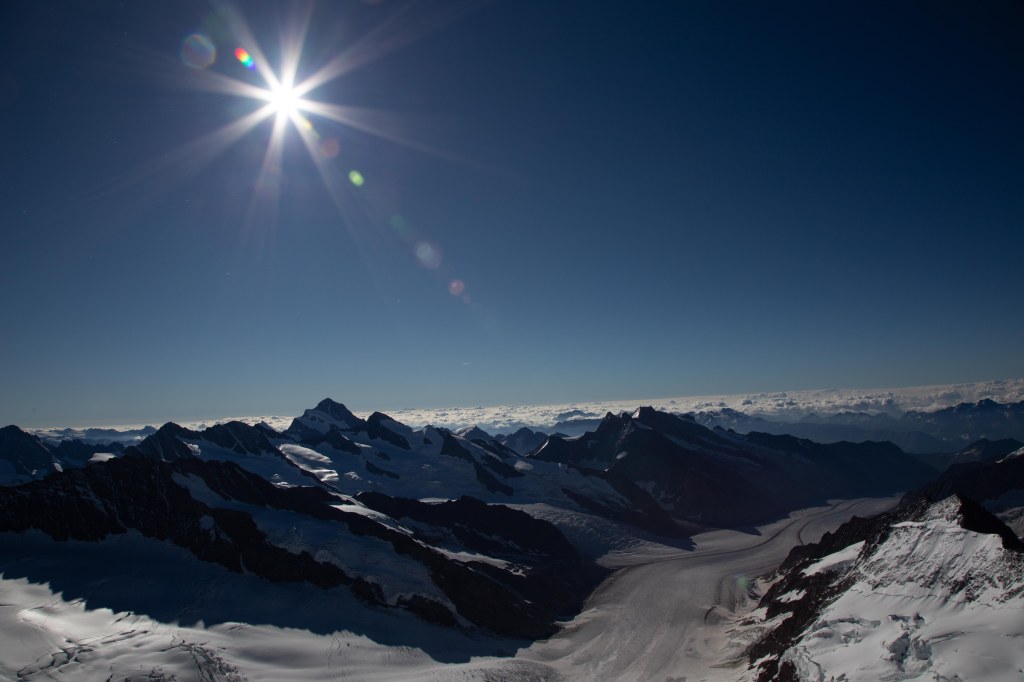
The climb ended with an uphill trudge back to the Jungfraujoch train station. The total duration was 8 hours and 38 minutes – relatively slow, but we were very safe. The challenge is to become fast and safe because speed is often the safest option – especially when its hot and sunny and the snow begins to melt and loosen. It was a fantastic climb. Andrew and I worked really well together. There is nothing quite like mountaineering for deepening a relationship and we are both looking forward to our next challenge – Piz Bernina, later in the summer.
 Expeditions