Lock-down has closed all the mountain lifts but the Swiss Alpine Club has now opened the mountain huts so the goal of climbing every 4,000m peak before I reach 70 is back on! This is a statistics heavy read for those of you who enjoy a bit of data crunching!
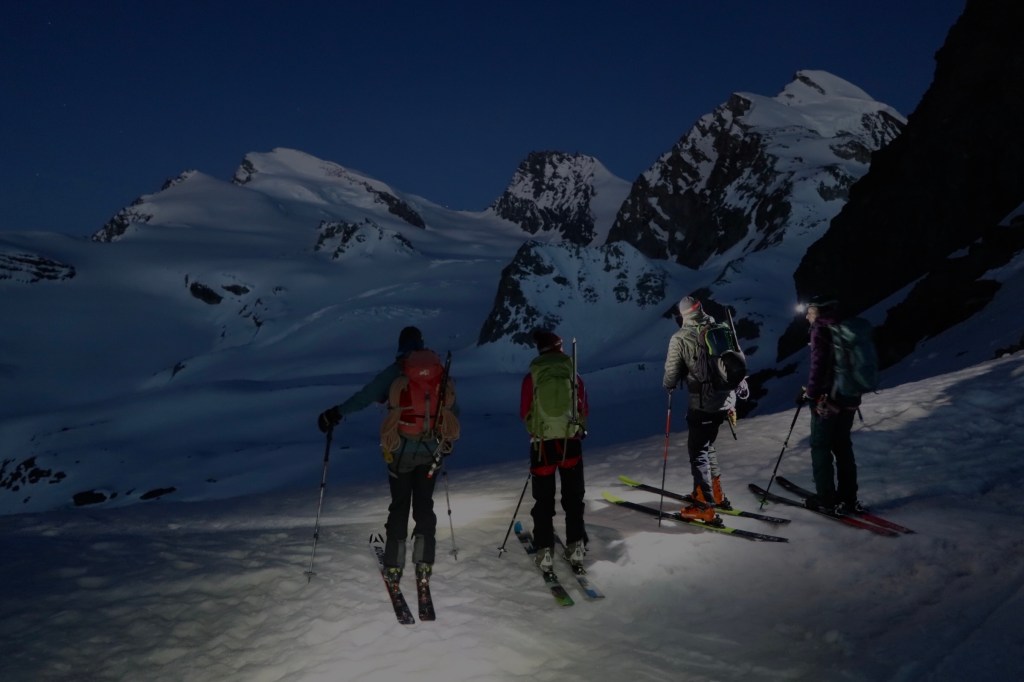
The lack of any lifts meant I spent three hours “sleeping” in a bivvy bag on the floor of a carpark before starting the hike from Saas-Almagell to the Britannia Hut – surprisingly comfortable but very little sleep.
We “woke” at 1:00am and hiked for two hours before we finally encountered enough snow to skin. I really do not like hiking with skis and boots attached to my backpack – it’s way too heavy. Conditions were good and Seb and I made rapid progress – we reached the hut in three hours, whereas the guidebook says 3:20 and we were weighed down like beasts of burden. Saas-Ammagell is at 1,672m and the Britannia Hut is at 3,030m we our ascent rate was 450m per hour which will be a useful metric for planning future trips. I suspect that with lighter packs we would be a little quicker but not much more.
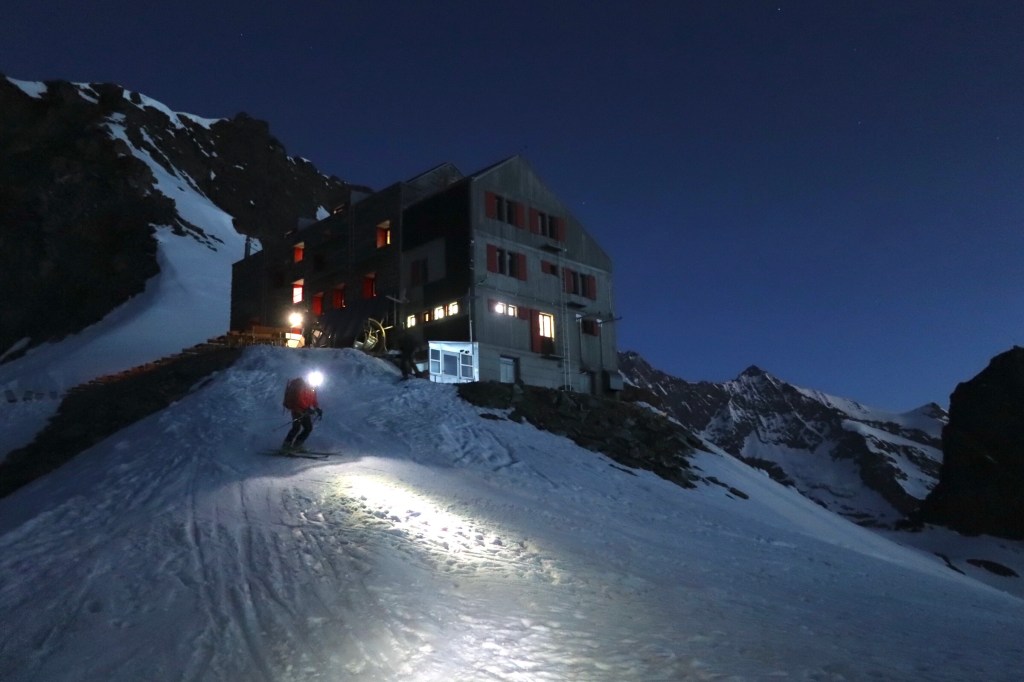
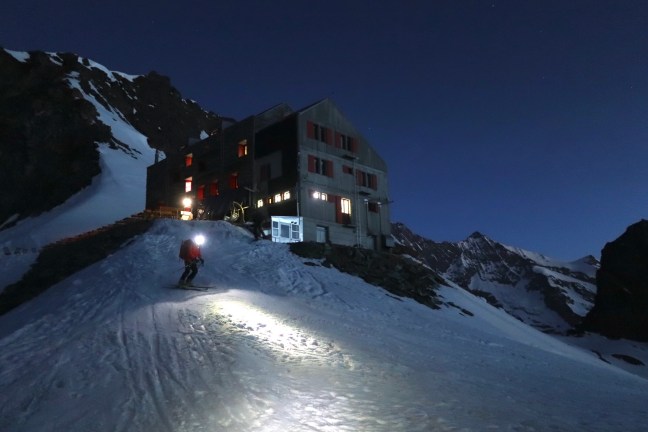
We arrived at the Britannia Hut at rush how at around 4:40am and the hut was emptying of ski mountaineers ready for their day of adventure. We descended from the hut – there is always a descent these days as the glaciers have receded so much that the length of these descents is often terrifyingly long. I am not particularly politically minded although the depressing state of the glaciers always makes me think I should be doing more – the thought quickly evaporated as I focused on getting down the slope.
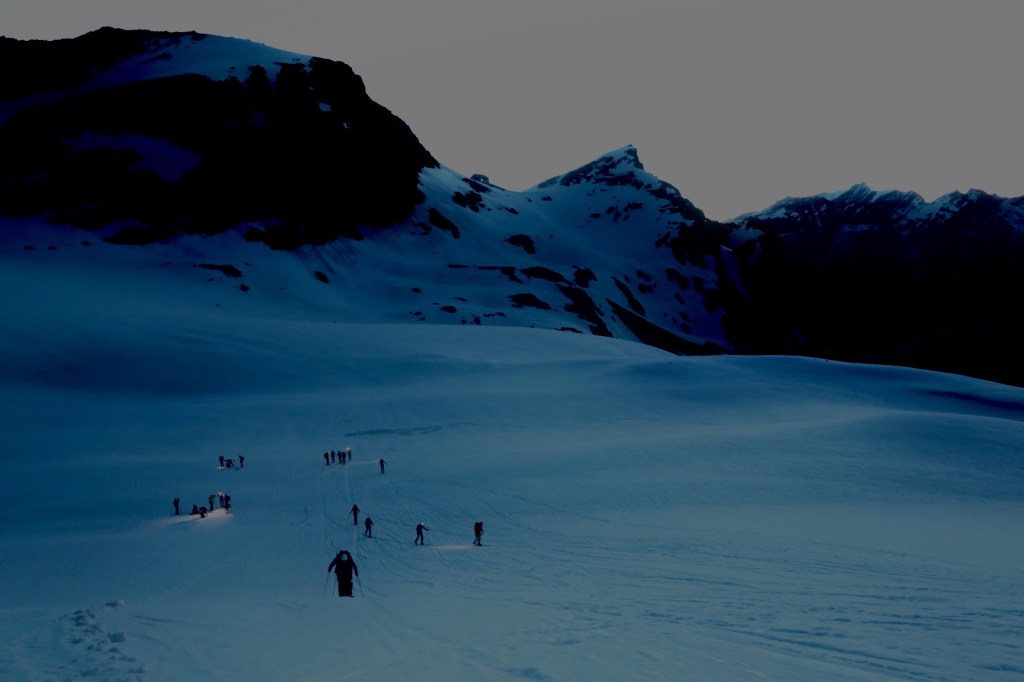
We began the gentle and easy ascent towards the foot of the Rimpfischhorn. There were a few mountaineers in full Patrouille De Glacier lycra which was an odd site and they were going hard. I bristled at being overtaken and worked harder than I normally would – I was relieved that we eventually overhauled them despite their skinny skis and light boots. We squandered our advantage ahead of the hordes however by staying too high as the glacier curved around before the climb to the final saddle and then deciding to take off our skis before traversing a not so steep slope – in the time it took us to gets skins off and then back on, everyone was ahead of us having just traversed normally with their skins on.
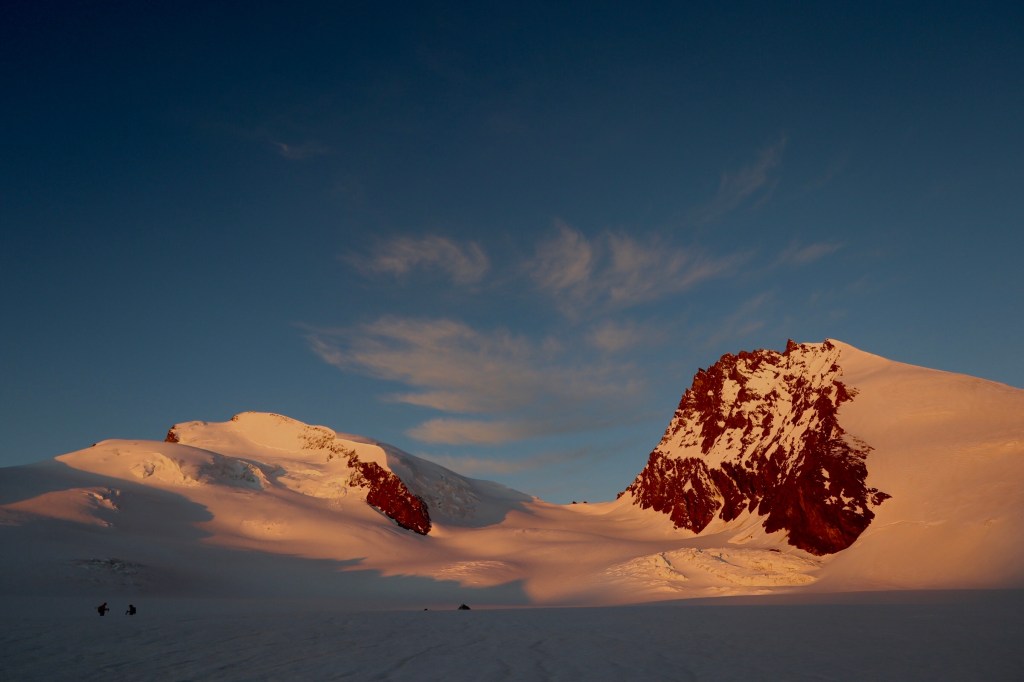
Then we entered the “pain cave”. Despite summiting Grand Luy (3,509m) two days before to help with acclimatisation the ascent to the saddle at 4,00m just before the rocky part was horrendous. It was a slow, painful and exhausting slog and I just focused on putting one foot in front of the other and sucking in as much of the pitifully thin air as possible.
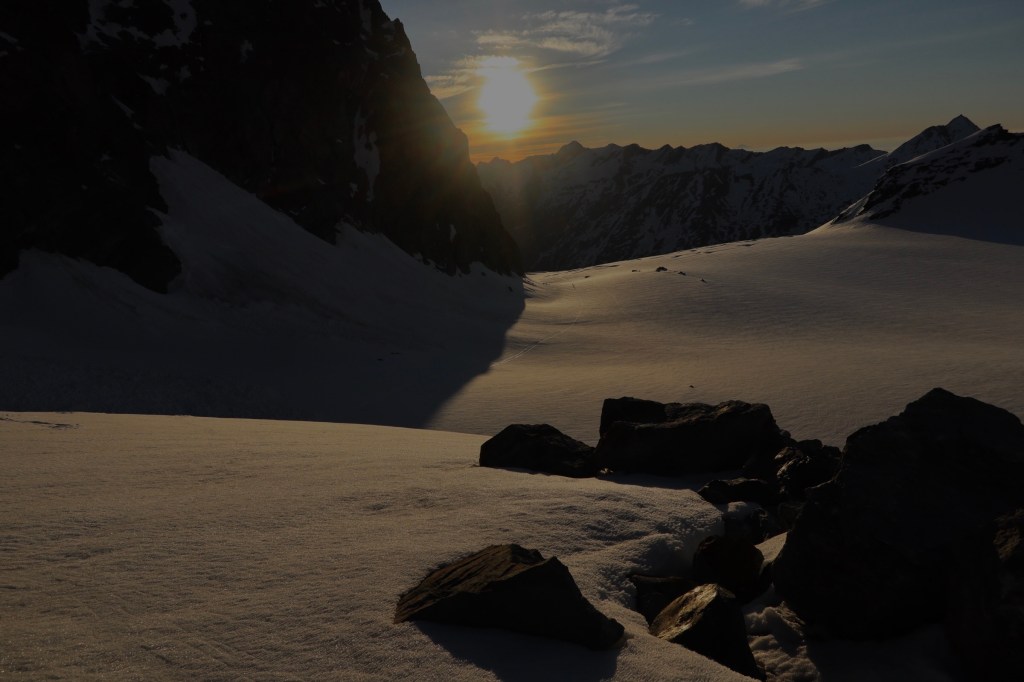
We began the climb and Seb, as the stronger climber, took the lead. It was my first climb without a guide but not as the leader and so I had to trust Seb to make good decisions and protect me where necessary. This was only our “second mountaineering date” together and like any relationship it takes time to build up trust and rapport. We worked well together and moved fast, reaching the summit in 46 minutes – our ascent rate over rock was 260m (again, another useful metric for future planning). The Rimpfischhorn is graded PD+ (a little bit difficult) and was not particularly challenging so a fast ascent rate was expected. When I climbed the Weishorn with Bertrand (guide), a much harder mountain with a grade of AD+ (quite difficult), the ascent rate was 95 m / hour and on the Zinalrothorn AD- the rate was 172 m / hour.
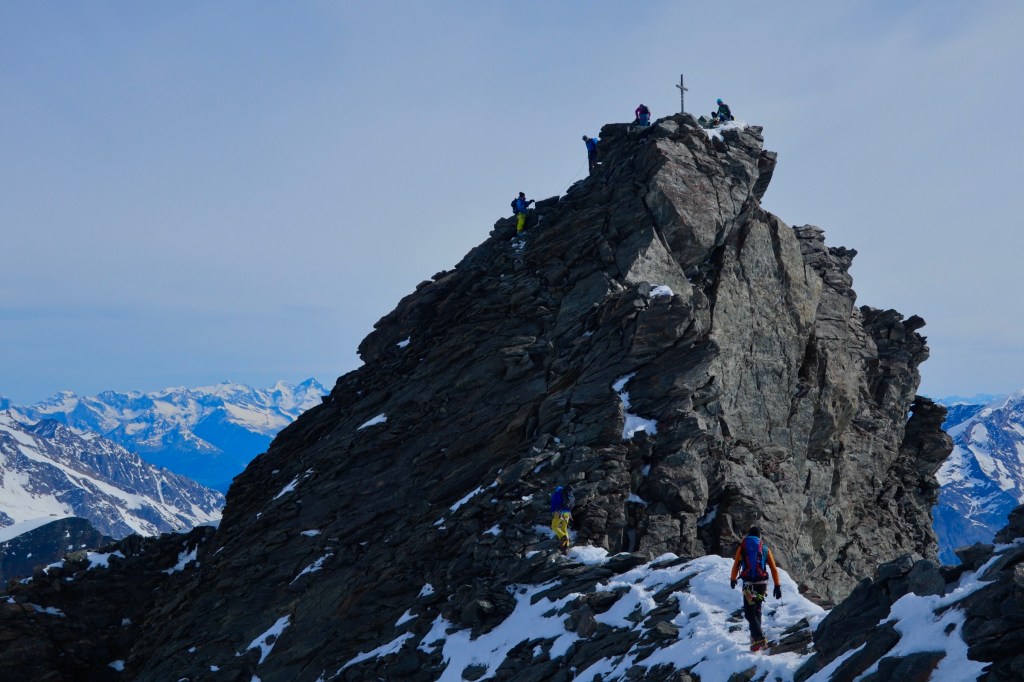
It was crowded on the summit and very little social distancing was taking place. It had been such a short rock section of only 200m that the summit itself was a little unsatisfying. But it was my first, of what I hope, will be a series of mountains with Seb and the start of an effective mountaineering partnership.
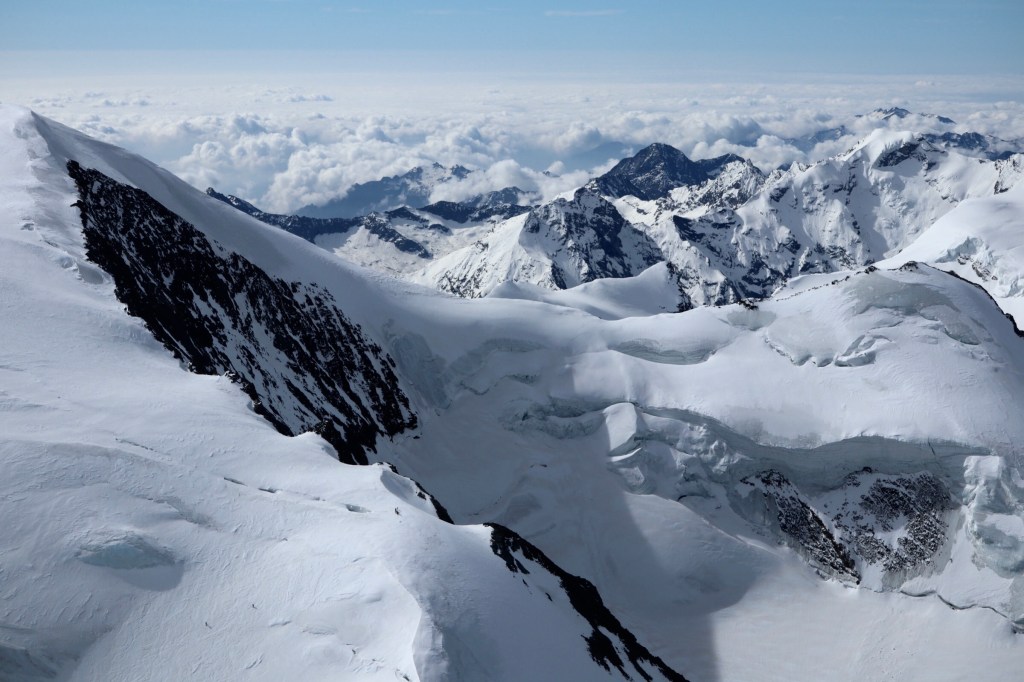
We were less efficient on the descent taking 1:45 so a descent rate of 115m per hour – 45% of the speed of our ascent. Most of my climbing has been done with guides and they are so fast with their ropework, they would just lower me down the mountain from a bomb proof anchor and then have the confidence to down-climb rapidly without protection. When I climb with a guide the decent rate is more or less the same as the ascent rate. Seb and I “debriefed” in the car on the way home and agreed we would need to develop our “systems” and ropework so that we could be as fast on the way down as we were on the way up.
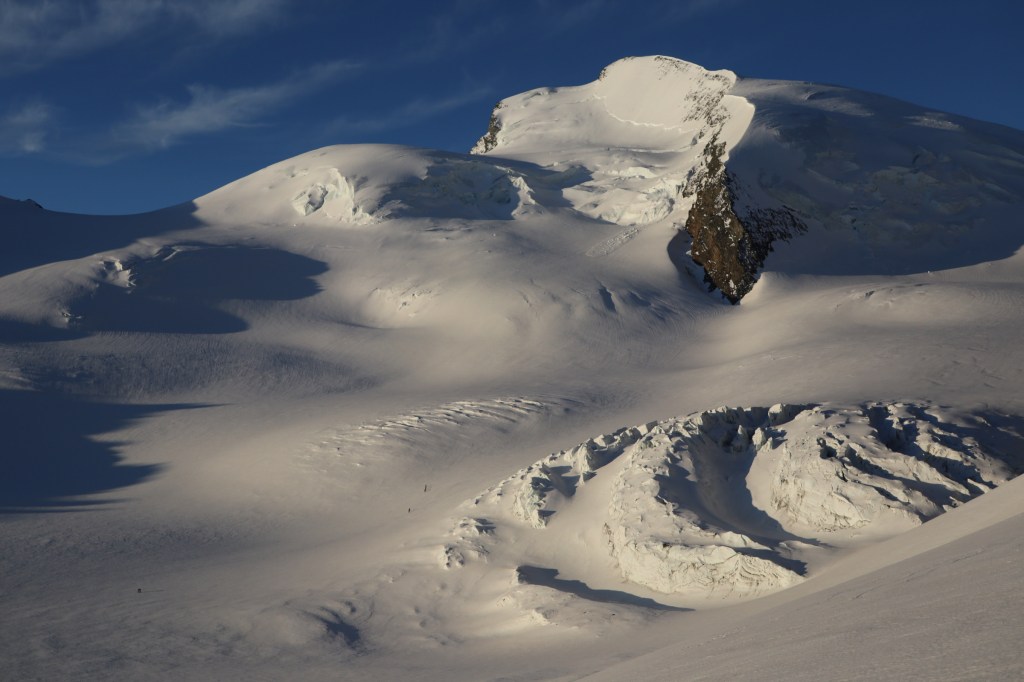
We had a great ski down, pretty much perfect spring skiing all the way to the point we left our approach shoes. We then made it back to the car in just over the hour, whereas it had taken two hours to walk up.
We celebrated our success in a Scottish themed mountain café and I enjoyed a thoroughly good slice of Dundee cake. I have now climbed 27 of the 48 4,000m peaks on my list, so now 56% complete and with a “staycation” on the cards this summer I am hoping to get many more completed.
 Expeditions